Monday, March 16, 2015

Mortgaging our children’s future: Aussie ticking time bomb sparks fears should new GFC hit


AUSTRALIAN households are sitting on a ticking time bomb of debt, exposing the economy to risks in the event of another financial crisis, according to new analysis.

The Australian reports household debt in Australia is equal to 130 per cent of GDP, compared with an average across the advanced world of 78 per cent, according to Barclays chief economist Kieran Davies.

Household debt was at 116 per cent of GDP before the global financial crisis and held steady until 2013, when the property boom set it rising again.

Mr Davies said Australia’s debt levels were rising when those of other countries were falling, and the predicted rate cuts were likely to push borrowing even higher.

Reserve Bank governor Glenn Stevens warned of the dangers of taking on excessive debt last year, saying “we would surely be asking for trouble if we see a big step up from where we are”.

“The tricky thing for the Reserve Bank is that promoting leverage is the key channel for the transmission of lower interest rates through to the rest of the economy,” Mr Davies said.

The high popularity of real estate investment in Australia compared with other countries is being driven by the availability of negative gearing tax concessions and favourable capital gains tax treatment.

The level of household debt is higher now than at any other time in Australia’s history, with records going back to the 1850s. The level of bank lending as a share of GDP is now more than double the share of the previous peak, which was during the 1890s land boom.

Sunday, March 8, 2015

Using Super to Buy First Home a 'Pressing National Issue' Says REIA


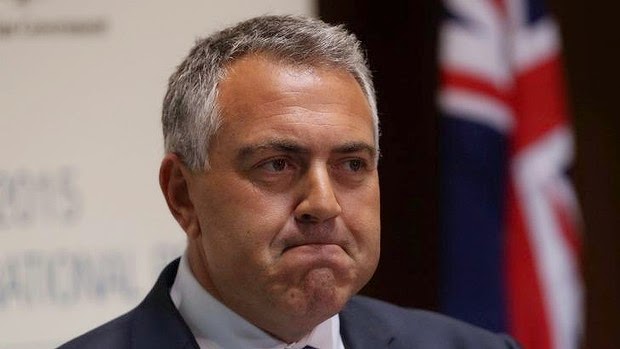
Federal Treasurer Joe Hockey appears to have taken the real estate industry lobby group's advice in suggesting people should be able to use their superannuation to buy their first homes, as the peak superannuation body urged caution for such an approach.

The Real Estate Institute of Australia outlined the radical idea in its budget submission to Mr Hockey last month, with the treasurer saying Australians ought to start thinking seriously about the way in which their super savings can be used in the future because people were working and living for longer.

"We are prepared to look at a diverse range of proposals to help young Australians buy their first home," Mr Hockey said, suggesting that super could be used for a deposit on a first home or job retraining.

His comments were quickly criticised by Labor and some economists, but REIA chief executive Amanda Lynch said using super to help pay for a first home could make housing more affordable and build retirement savings.

"We believe that owning a home is the biggest generator of long-term financial security for Australians and the earlier you can access the housing market, the more secure your retirement will be because most Australians aspire to have paid of their home before they retire," Ms Lynch said.

Shadow Treasurer Chris Bowen rejected the suggestion, saying it would have the opposite effect.

"[The] plan would have the likely effect of not only undermining retirement incomes but also driving housing prices up further and making it harder for first-home buyers," he said.

Association of Superannuation Funds of Australia chief executive Pauline Vamos said the plan would benefit the rich far more than the poor.

"There are significant equity issues when it comes to allowing the release of concessionally taxed superannuation contributions for home equity," she said, referring to higher income earners paying 45 cents in the dollar in income tax but only 15 cents in the dollar on superannuation contributions.

They would be able use concessionally taxed super money to buy a house and then top up their super, again at a low tax rate.

"There significant equity issues when it comes to allowing the release of concessionally taxed superannuation contributions for home equity," she said.

But Ms Lynch stood by the proposal.

"The fact about buying a house is that you are actually saving all that equity and the compounding interest will be beneficial. To say that investing in superannuation, which is mainly skewed towards shares, is a safe proposition doesn't hold up to scrutiny.

"In the years since the GFC we have actually seen super being more of a financial risk than previously and a lot of people close to retirement have found their super balances have been dwindling."

Private Health Insurance Pain as Households Struggle to Cope With Rises

Private health insurance pain as households struggle to cope with rises


Private health insurance premiums are set to rise an average 6.18 per cent on April 1.

HALF of Australia’s private health insurance customers are thinking about downgrading their cover in an effort to combat soaring premiums.

Ahead of an average health insurance rise of 6.18 per cent on April 1, new research by consumer network One Big Switch has found that two-thirds of households have had trouble paying their bill.


Its survey of 40,000 consumers also found that many people are making sacrifices to stay insured, including reducing their level of cover, increasing their excess and spending less elsewhere.

One Big Switch spokesman Joel Gibson said this year’s premium hike was the second consecutive annual bill rise of about $300.

“Health insurance is one of those bills that really gets under people’s skin,” he said.

“Sooner or later, something’s got to give, or thousands of consumers will dump their private cover and fall back on the public health system.”


Consumers who \dump their private cover will fall back on the public health system. Picture: Publishing Ingram.

Mr Gibson said some people were trading away certain treatments, such as heart or eye treatments.

MORE: The government’s health fund rebate slashed costing families $120 a yea

He cautioned about quitting private health cover outright. “There’s the danger that if you drop it altogether, because you can’t afford it, it becomes harder to get back in if you are over 30.”

The Federal Government’s Lifetime Health Cover rules penalise people with a loading of 2 per cent for every year after age 30 that they don’t have hospital cover, up to a maximum 70 per cent loading. There are also penalty taxes for middle and higher income earners who don’t take out hospital cover.

“Australians want the peace of mind that comes with private health insurance, but many are now being priced out of the market,” Mr Gibson said.

Medibank chief customer officer Laz Cotsios said customers should review their health insurance policies at least annually.

“A cover review allows people to consider their situation and check that their cover still suits them,” he said.


Medibank branch, Adelaide Street, Brisbane. Medibank was floated on the stock market today. Customers discuss their impressions of the float. Photo: Claudia BaxterALSO: Pay doctors more but only when they provide the right care say health funds

“Don’t forget that you can prepay your health insurance to lock in your current premium.”

More than 20,000 people have signed a One Big Switch petition calling for more affordable private health insurance, and the consumer network has joined forces with News Corp Australia in a campaign to use people power to unlock a group discount offer from a health fund.

RELATED: Mooted private health insurance ‘excess’ rise could double the cost of an operation

Last week was the first week of the four-week Big Health Insurance Switch campaign and more than 45,000 people signed up. Joining is free and there is no obligation to accept any offer that is presented.


The Big Health Insurance Switch

For more details visit moneysaverhq.com.au. One Big Switch and News Corp Australia earn a commission on any offers that are accepted.

Tuesday, March 3, 2015

Perth House Prices Fell 2.3 percent in February

House values across Perth fell by more than 2 per cent through February despite the cut in mortgage interest rates.


Figures:
from RP Data-CoreLogic showed values in Perth dropped by 2.3 per cent
to be 2.9 per cent down since the start of the year.

The fall was not confined to houses. The value of units dropped by 0.4 per
cent in the month to be off by 0.9 per cent this year.

Over the past 12 months house value sin Perth are up by just 0.7 per cent,
well short of inflation, while unit values have fallen in nominal value
by 1.9 per cent.

Only Hobart has a softer house market than Perth with values on the Apple Isle up by 0.6 per cent.

The fall came despite the Reserve Bank slicing official interest rates to their lowest level on record. Banks cut their mortgage rates in line with the Reserve.

Nationally, prices edged up by a modest 0.3 per cent but almost all of the growth was in Sydney
where house values lifted by 1.6 per cent.

Over the past year, Sydney values have climbed by 14.7 per cent.

RP’s head of research Tim Lawless said there had been step down in growth over the past three months.

He said outside of Sydney, lower interest rates were failing to drive up values.

“We might not see the lower interest rate environment stimulate the housing market as much as it has in the past,” he said.

“Weaker jobs growth, higher unemployment, declining affordability, low rental
yields and political uncertainty are all factors that could dent consumer confidence and provide some counter balance to the rate cuts and quell any additional market exuberance.”

The Reserve Bank board meets tomorrow with markets putting the chance of a rate cut at 50-50

Tuesday, February 3, 2015

Australian Dollar Tumbles on RBA Cash Rate Cut


The Australian dollar tumbled by more than one and a half cents on the Reserve Bank of Australia's decision to cut the cash rate to a historic new low.

The local currency hit a fresh five-and-a-half year low to US76.57¢ on Tuesday afternoon, down from US78.16¢ just before the release. The reaction followed the central bank's decision to cut the cash rate by 25 basis points to 2.25 per cent after 18 months of holding the rate steady.

Despite the sharp fall in the Aussie dollar – nearly 20 per cent in the past six months – the Reserve Bank said the exchange rate remained high. 

"The Australian dollar has declined noticeably against a rising US dollar over recent months, though less so against a basket of currencies," the Reserve Bank said in its statement on monetary policy.

"It remains above most estimates of its fundamental value, particularly given the significant declines in key commodity prices. A lower exchange rate is likely to be needed to achieve balanced growth in the economy."

Market forecasts the exchange rate to continue to fall. On Commonwealth Bank of Australia figures, the local currency is expected to fall towards 73¢ by June this year, but the bank's senior currency strategist Elias Haddad said there was a risk the Australian dollar will fall even further and the bank will be revising its forecast.

"We expect a further downside movement here, not just against the US dollar but also on the crosses, due to narrowing interest rate, falling commodity prices and still unimpressive Chinese economic data," Mr Haddad said.

National Australia Bank will also be revising its forecast in light of Tuesday's tumble. Back in November last year the bank forecast the Australian dollar to hit US78¢ by the end of 2015. NAB global co-head of FX strategy Ray Attrill said the bank will be reviewing its forecast after the central bank releases its statement on monetary policy on Friday.

"The market already priced in the expectations of a rate cut, but the currency still lost. It shows the market is still prepared to sell," Mr Attrill said.

In an exclusive interview with The Australian Financial Review in December last year, Reserve Bank governor Glenn Stevens said an appropriate level for the Australian dollar would be US75¢.

Mr Attrill said the currency could be heading towards the US70¢ mark, given the fall in the commodity prices since December.

"You can argue, if US75¢ was about the right level in mid-December, and taking into account what's happened with commodity prices generally, maybe US70¢ is more appropriate," he said.

A batch of data fuelled RBA jitters earlier on Tuesday. The Australian dollar jumped by more than third of a cent to US78.30¢ after slightly better-than-expected economic data was released: building approvals slipped 3.3 per cent in December (better than the predictions of a 5 per cent slide) and trade deficit narrowed to $436 million in December, beating expectation of more than $850 million.


#AustralianDollar #RBA #interestrates

Thursday, September 4, 2014

House Price Boom Must End, Says David Gonski


ANZ chairman David Gonski has warned Australia's booming housing prices cannot go on forever and the market will eventually experience a correction.

The former Future Fund chairman said ANZ and all the big banks were "very aware of history" when it came to financial lending in the residential mortgage market.

"There will come a time when there will be a correction," he told the Australian British Chamber of Commerce.

"The fact is, anyone who believes prices always go up is, I think, a fool."

Mr Gonski's comments come as the housing market heats up as spring approaches. Capital city markets had their strongest winter since before the lead up to the financial crisis, according to figures released on Monday by RP Data.

Sydney and Melbourne house prices lifted 5 per cent and 6.4 per cent respectively over the three months to the end of August. The surge represents year-on-year growth of more than 16 per cent in Sydney and almost 12 per cent in Melbourne.

Brisbane, which was one of the weaker-performing cities, recorded a 1.3 per cent property value increase in the three months to the end of August.

The Reserve Bank warned in its submission to the Financial System Inquiry that moves to boost competition in the home loan sector could increase risk in the financial system.

Regional banks, credit unions and building societies have urged the federal government to change regulations that give the big banks a significant cost advantage when making home loans.

Mr Gonski also backed ANZ's Asian strategy, questioning why some in the market consider ANZ to be "riskier" than its peers because it is in Asia.

"I believe it's quite odd, I have to say, that we are regarded as a riskier investment because we have investments outside Australia.

"I could very well argue that a good investor has some money in Australia and some money overseas. That's exactly what the ANZ has done."

Saturday, August 30, 2014

Australia 'at the Front' of Growing Subprime Mortgage Market

Australia 'at the Front' of Growing Subprime Mortgage Market


They triggered an economic meltdown in the United States and sparked the global financial crisis, but subprime mortgages are staging a revival in Australia.

Ratings agency Moody's says Australian lenders have doled out $3 billion worth of the non-conforming home loans over the last 18 months.

Prime mortgages are those that typically go to people with good credit scores, secure jobs and existing, well-serviced loans.

Moody's analyst Robert Baldi says non-conforming, or subprime, borrowers tend to have patchier personal financial histories.

"We're looking at things like prior bankruptcies or prior defaults in their credit history past," he explained.

"If the borrower is a non-resident, for example, or it's a jumbo loan, these would all fall outside of the lenders' mortgage insurance criteria and would classify the loan as non-conforming."

Essentially, subprime loans are those going to borrowers with a much higher risk of default that a typical loan.
Australia 'out at the front' of subprime market

While subprime remains something of dirty word in the economies hardest hit by the GFC, Australian lenders are increasingly willing to step up and fund subprime loans by selling what are known as residential mortgage backed securities (RMBS).

"Australia is out there at the front of the market, I would say, so we are the ones that have continued with issuance in this space," Mr Baldi said.

"Since the beginning of 2013, we've seen 10 new transactions in the RMBS market from non-conforming issuers and that's totalled about $3 billion, so that's quite a pick up in volume considering the market did shut down post the crisis in 2008."

While $3 billion sounds like a large amount of money, Mr Baldi says it is a relatively small share of the home loan market, and of RMBS issuance.

"In the year to date we saw roughly about $15 billion of RMBS transactions. Of that, about $1 billion was non-conforming, so we'd say about 7 per cent of issuance this year has been from the non-conforming market," he added.

Moody's says most of these loans are being written by non-bank lenders.

However, Mr Baldi is confident that there is enough regulation in place to avoid a subprime crash similar to that in the US in 2008.

"One of those is the National Consumer Credit Protection Act, and this basically requires lenders to take reasonable steps to verify a borrower's financial position and their ability to repay the loan," he said.

"Essentially this gets around the fact that in the US you saw those loans being written to borrowers pre-2008 with little to no income verification. In Australia that just can't happen."

The United States is still managing the fallout from its subprime crisis.

Last week, finance powerhouse Bank of America Merrill Lynch agreed to an almost $US17 billion settlement for its role in the crisis.
Australia's biggest danger in prime mortgages

Despite that history, banking analyst Martin North sees Australia's non-conforming market as much safer.

"Most of the investors now, the people who are buying these mortgage-backed securities, are now Australian investors rather than overseas investors," he said.

"So there is a bit of a feedback loop going on, and that does mean that some of the other players who might be buying those securitised loans now are essentially home-based rather than offshore-based."

Mr North says the subprime segment of Australia's market is so small that it is unlikely to destabilise the financial system, even if a lot of the loans go bad.

However, he says Australia's banks, households and the economy in general is too heavily reliant on real estate.

"This is a very small proportion of a much bigger question about leverage into property," he warned.

"We have a massively leveraged financial services system into property more broadly.

"If we have the sorts of defaults we're talking about in the non-conforming sector, then you would also be having, I think, similar defaults more broadly across the market, and it's those broader defaults across the market that would be of much more concern rather than the non-conforming element, which I think is quite small and quite isolated." - 


See more at: http://propertysydney.blogspot.com.au/2014/08/australia-at-front-of-growing-subprime.html#sthash.70AOW7HQ.dpuf